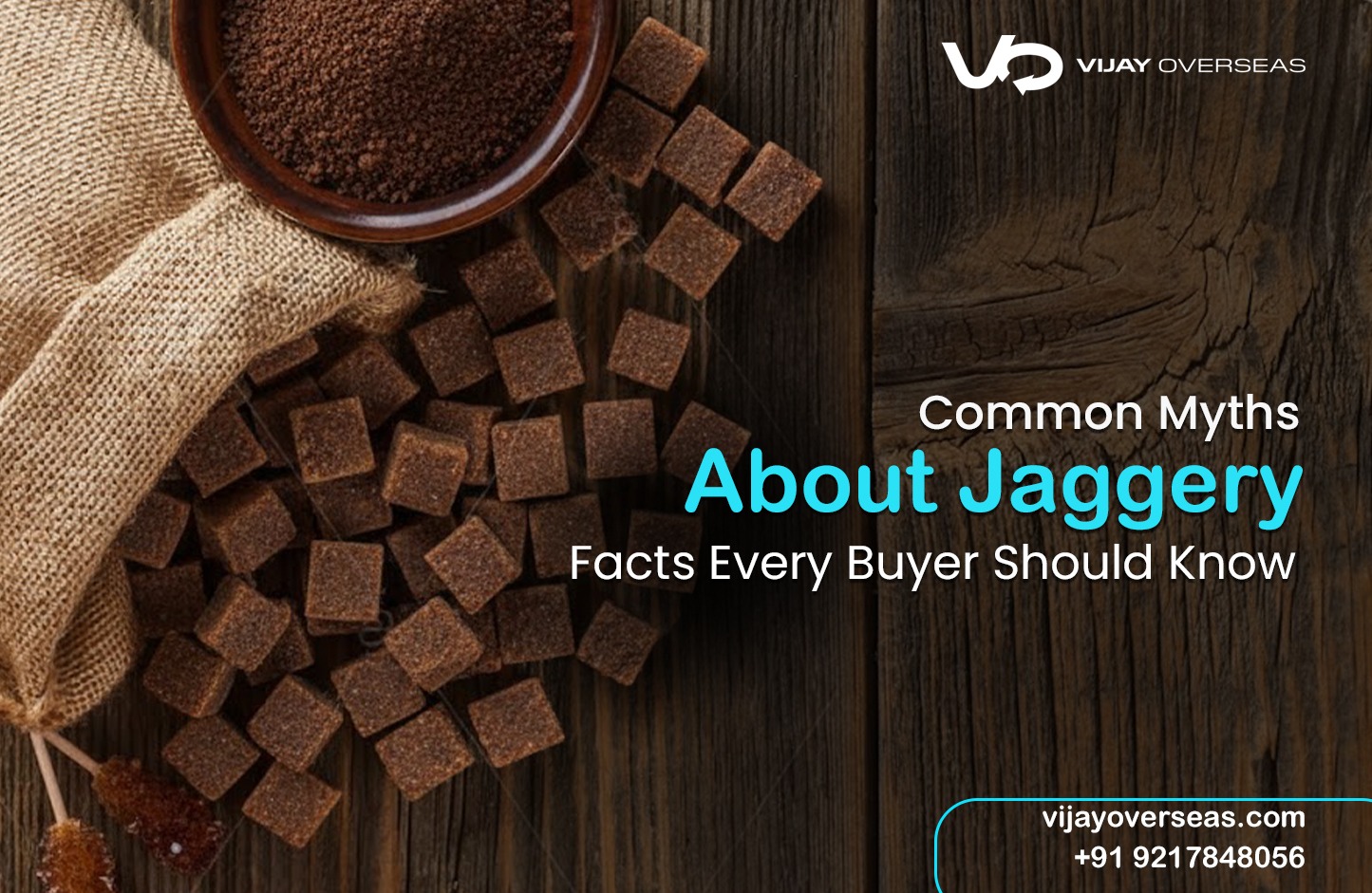
Jaggery is traditional sweetener used for centuries, but one that is often sorely misunderstood— particularly in current trade and the global market. A lot of misinformation about jaggery is spread without having much clue about how each the methods of production, processing and resulting quality work.
For purchasers, importers and food producers alike it’s critical to separate fact from fiction in order to make educated sourcing decisions. Pay no attention to these nonsense, and here is what buyers should actually know.
Myth 1: The Darker The Jaggery, The Better Its Quality
Fact:
Colour is not an indication of whether jaggery is good or bad.
Unadulterated jaggery varies from golden brown to dark brown in color, depending on how it is prepared:
- Sugarcane variety
- Harvest timing
- Clarification method
- Processing temperature
There is a dark jaggery, which is colour because it has been processed with sugar; The bubbles in sugarcane polyphenol are not black or those from gur – another indication of unnatural treatment. Quality is to be judged by consistency, aroma, texture and production method – not colour.
Myth 2: Jaggery Is Naturally Chemical-Free All jaggery is chemical-free by default.
Fact:
Jaggery isn’t necessarily non-chemical in all cases.
Chemical clarifiers are widely used in most of these traditional kolhu units to clean impurities from the boiling sugarcane juice. Although this practice is common, it’s widely misunderstood and thought of as natural.
New jaggery plants are no longer called for to use animal-derived, water clarification ought to properly be executed, after that the mere fact that it does not have taste changers needs to suffice. Ask buyers for how the clarification process occurs, not just what it is when completed.
Myth 3:Conventional Jaggery Is Sustainable Always
Fact:
Traditional is not the same as sustainable.
Small-scale kolhu methods often involve:
- High water consumption
- Gunshots being fired stirring up air pollution
- Limited waste and emission control
They may be of interest culturally, but very few can become sustainable at scale. In comparison, contemporary (kalesar) crusher plants are built to minimize water waste and smoke thus they can sustain responsible long term production.
Myth 4: The texture of jaggery does not matter.
Fact:
Texture is the primary attribute of quality.
High-quality jaggery should have:
- Hard and brittle in texture (hard jaggery)
- Smooth surface without excess stickiness
- Uniform granulation (jaggery powder)
Uneven texture might indicate improper boiling, unbalanced moisture or inadequate storage. In export markets, texture has a direct impact on shelf life, packing efficiency and transportability.
Myth 5: All jaggery has the same flavour.
Fact:
Flavor is any different according to source and treatment.
Jaggery’s flavor profile depends upon:
- Sugarcane origin
- Processing temperature
- Concentration method
True jaggery tastes subtly of caramel, with some background notes of really sugary sugar cane – it is not an intensely sweet or insipid sweetness. Any difference in taste from batch to batch can signal that processing was not uniform, a situation importers want to avoid.
Myth 6: Jaggery doesn’t need quality control.
Fact:
Export-quality jaggery requires strict consistency.
International buyers expect:
- Uniform colour and texture
- Repeatable taste profiles
- Stable moisture levels
- Hygienic packaging
If over-boiled without proper control of the cooking process, jaggery can separate out to a crystalline form. This is why professional export houses do not depend solely on human judgment but rather invest into standardised processes and tracking systems.
Myth 7: Jaggery Is a Local or Ethnic Product Only
Fact:
Jaggery has growing global demand.
With rising interest in:
- Natural sweeteners
- Clean-label ingredients
- Traditional food products
International food brands, bakeries and specialty retailers have embraced jaggery. Maintaining that quality and consistency is what has allowed jaggery to go from local markets to international shelves.
What Every Buyer Really Needs to Know
Rather than going off of guesses, what buyers should be focused on:
- Method of production (chemical or vapour clarification)
- Consistency across batches
- Texture and aroma
- Packaging and storage standards
- Supplier transparency
More”Certainly are truths that demystify and more accurately reflect true wine quality than myth or visual appearance, and indeed tasting your wine.
Vijay Overseas’ Commitment to Transparency
The team at Vijay Overseas feels informed buyers; are better business partners. Our jaggery is handmade by advanced, efficient methods that value:
- Vapour-based impurity removal
- Controlled boiling and concentration
- Less water and air pollution
- Reliable quality for both domestic and export market
We are committed to reliability, sustainability, and transparency at every step of the way.
Conclusion
It’s a humble product but the quality of jaggery hinges on a host of complex factors — from processing techniques to uniformity control. We can have confidence that by setting aside popular myths and instead concentrating on the facts we know to be accurate, buyers will make responsible choices for sourcing.
Clear knowledge about jaggery is the initial building block of trust in long term supplier relationships.
For more details on Vijay Overseas and our eco-friendly, chemical-free jaggery or exporting services here:
👉 www.vijayoverseas.com
For wholesale supply, export inquiries or collaborations, we invite to you reach out to us.
Leave a Reply