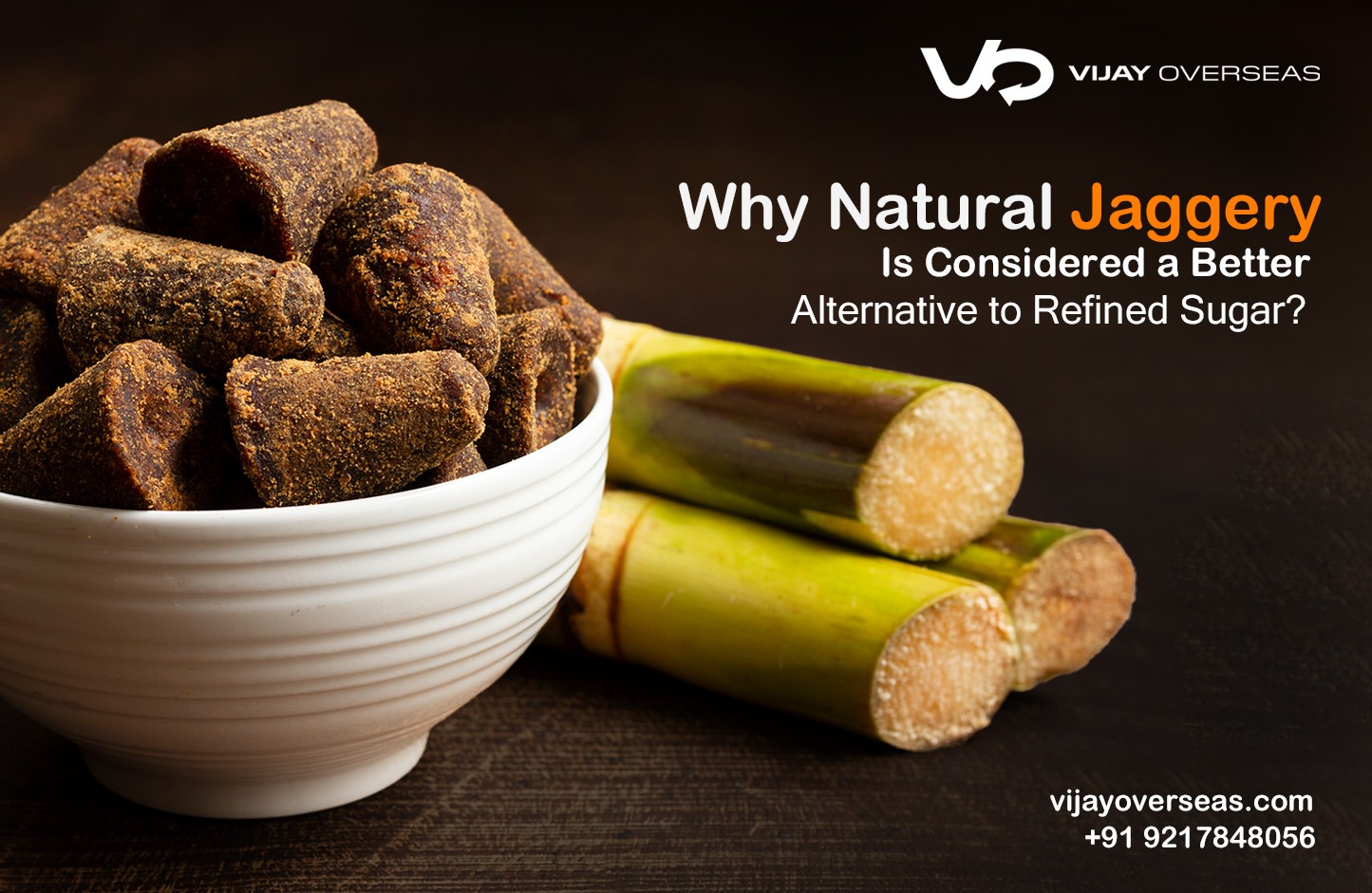
Sweeteners are a key ingredient of daily diets worldwide. Refined white sugar has ruled all our kitchens for ages—it’s cheap, it is easy to get and is so damn sweet! Nevertheless, in an era when the public is increasingly mindful of what gets done to food and finding out what goes into it, both customers and shoppers are rethinking their decisions.
And, amongst the traditional sweeteners which are making a comeback now is our very own jaggery. Traditionally used in Indian homes, jaggery is becoming popular around the world as a healthier substitute to refined sugar.
But what makes natural jaggery different — and why is it often referred to as a superior option? Let’s explore.
- Difference in Process: Natural vs Ultra-Refined.
The most important distinction between the two is how they are made: natural jaggery vs refined sugar.
Natural Jaggery
- Cooked by boiling freshly extracted juice of the sugarcane
- Minimal processing
- No separation of natural components
- Traditionally prepared in open pans
Refined Sugar
- Produced through multi-stage industrial refining
- The clarification and bleaching is done using chemicals
- Strips away natural compounds
- Results in a highly pure, crystalline product
And since jaggery undergoes far less processing, it retains much more of the indicia of sugarcane.
- Ingredient Simplicity
Unadulterated Jaggery gets appreciated for its pure nature.
- Derived directly from sugarcane juice
- No artificial colours
- No added preservatives
- No bleaching agents
White sugar, by contrast, is a highly processed industrial product that’s about consistent uniform whiteness and prolonged shelf-life rather than anything remotely like natural integrity.
This simplicity is an asset for consumers seeking clean-label ingredients.
- Retention of Natural Elements
In case of jaggery, the sugarcane juice is condensed instead of being separated. Therefore, jaggery naturally contains mineral salts and is rich in iron.
Refined sugar strips almost everything away except for sucrose. This is why it’s often referred to “empty sweetness” compared to natural sweeteners.
Although jaggery is still a sweetener, and one to be eaten mindfully like other sugar sources, its lower refinement is what makes it on trend with so many households and food manufacturers.
- Taste and Culinary Value
Taste is another key factor.
- Jan-jaguery has a nice deep sweetness and caramel-like undertones
- White sugar is nothing but plain sweet.
Due to its intricate flavour jaggery is a common ingredient in:
- Traditional Indian sweets
- Beverages
- Bakery products
- Ethnic and artisanal food items
Jaggery is also a preferred choice for chefs and foodmakers when they have to work with recipes that require depth of flavour.
- Cultural and Traditional Significance
Back in India we use jaggery quite a lot, it is an essential part of our food culture and traditional method of cooking. It’s been enjoyed for centuries and is commonly known to:
- Seasonal eating habits
- Festive preparations
- Traditional meals
Highly processed sugar, on the other hand is a far newer ingredient to enter into our food system due to industrialization.
It is this cultural context that defines jaggery as much more than a sweetener—it is heritage and tradition.
- Growing Preference in Global Markets
Worldwide, purchasers and consumers of food have interest in:
- Natural sweeteners
- Traditional ingredients
- Less-processed food products
The current trend demands natural jaggery to blend in. It is increasingly used by:
- Health-focused brands
- Organic and natural food retailers
- Artisanal food manufacturers
- Clean-label product lines
This transition has resulting the increasing the demand of Indian Jaggery in international market.
- Sustainability and Responsible Production
Traditional jaggery production often supports:
- Local farmers
- Small-scale producers
- Seasonal agriculture
Jaggery production is thought to need relatively few inputs relative to large sugar making because it does not require expensive imported equipment. When responsibly produced, it jives snugly with sustainable and ethical sourcing practices.
How Natural Jaggery is made in Vijay Overseas
At Vijay Overseas, we specialize in providing jaggery that is natural and chemical free that is made using conventional techniques accompanied with contemporary quality testings.
Our commitment includes:
- Sustainably sourced sugarcane
- Chemical-free processing
- Hygienic handling and packaging
- Consistent domestic and export supply
We strive to guarantee the jaggery we are providing satisfies current conscious consumers while honoring traditional methods.
Conclusion
Pure jaggery is better than refined sugar not because it’s a miracle food but rather that it’s less processed, natural and closer to its origin.
Even as the world embraces transparency and traditional food, jaggery’s place in being is ensuring not just that Indian kitchens but global homes are well supplied.
🌿 On the hunt for Natural Jaggery from a reputed Indian exporter?
Visit 👉 www.vijayoverseas.com
Browse our jaggery products or reach out to us for wholesale and export inquiries.
Leave a Reply